-
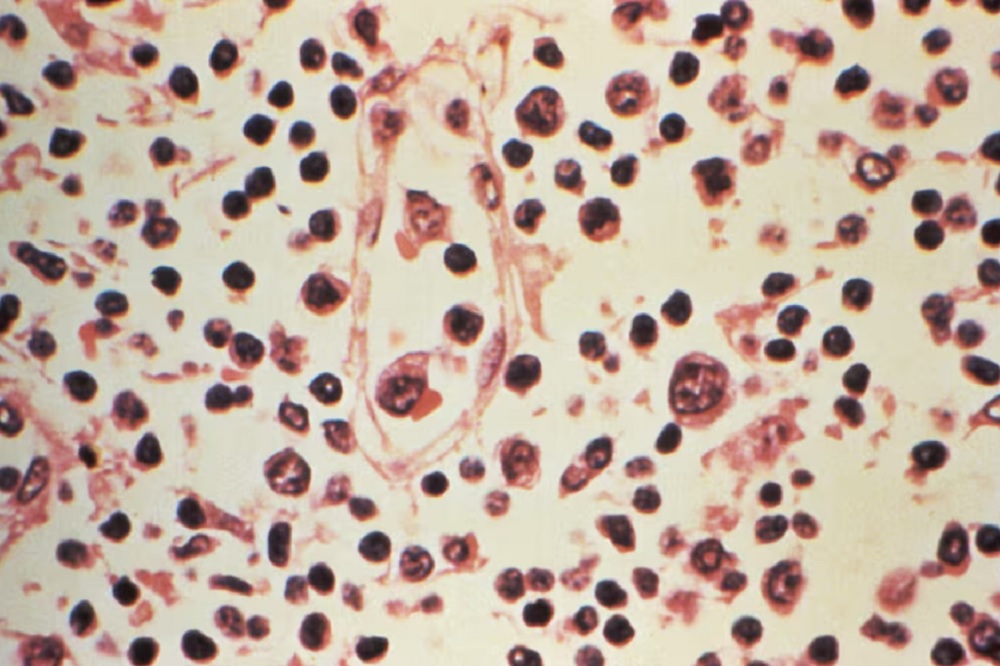
Some of the cytoarchitectural features in a lymph node specimen extracted from a patient suspected of a Hantavirus illness is seen in this handout photo obtained by Reuters, July 6, 2017.
Some South African health experts have warned against panicking following the recent detection of Hantavirus cases linked to a cruise ship travelling from Argentina to Cape Verde.
At least three people who were onboard have died while one remains in a serious condition at a Johannesburg Hospital.
According to the Department of Health, contact tracing has identified 62 individuals as possible contacts with the infected persons. It says 42 individuals have been traced and monitored.
The World Health Organisation (WHO) says it was alerted of serious respiratory illness case on a cruise ship on 2 May. Cases of Hantavirus were then later detected.
According to the WHO, Human Hantavirus spreads through contact with the urine, faeces, or saliva of infected rodents.
Infections can also happen by touching contaminated surfaces. Director for Centre of Epidermic Response and Innovation, Tulio De Oliveira, says the country is currently not at risk.
“We don’t expect to see in many cases in South Africa. Normally, the outbreak involves rodents and humans, and once detected, individuals isolated, which is the case now, and South Africa has very good isolation facilities. We deal with other pathogens like TB, that’s highly transmissible, the case tends to stop transmission.”
VIDEO | Dr De Oliveira says bigger Hantavirus outbreaks happened in Asia and South America:
#Hantavirus Pulmonary Syndrome (HPS), also referred to as hantavirus cardiopulmonary syndrome (HCPS), is a rare but severe zoonotic respiratory disease caused by hantaviruses carried by rodents. pic.twitter.com/MBwY9qfHEn
— National Department of Health (@HealthZA) May 5, 2026
Hantavirus can be fatal and its symptoms include dizziness and fever. The virus may further cause nausea, vomiting, diarrhea and abdominal pain.
Patients may develop shortness of breath, low blood pressure and kidney failure. According to Dr Jacqueline Weyer of the National Institute for Communicable Diseases – one of the passengers of the international cruise ship remains in a critical condition.
“A serious condition is stabilised, is being managed under isolation to ensure that there’s no onward transmission within the hospital setting, I think it’s very difficult to gain any understanding from this individual at this stage. So, he’s collecting histories and trying to put the pieces of the puzzle together.”
VIDEO | Acting Deputy Executive Director at the National Institute For Communicable Diseases Dr Jacqueline Weyer says SA’s response has been instrumental in identifying the Hantavirus outbreak:
Human cases are most commonly reported in rural settings. The WHO believes that the Andes strain is responsible for the outbreak on the ship. This strain can be transmitted from person to person.
“We are working under the assumption that it’s the Andes virus. So, from a precautionary point of view, we feel that this is the best approach to make sure that we have the right precautions in place,” says Infectious Disease Epidemiologist Maria Van Kerkhove.
The Department of Health has called for calm and some residents agree. “I don’t think I am scared, I don’t think as a nation we should freak out,” says one of the residents.
Another resident says; “We do have experience; I would assume that the government has an eye already on the situation and should respond with caution.”
The department maintains there has not been evidence of a wider spread of the virus to communities.