-
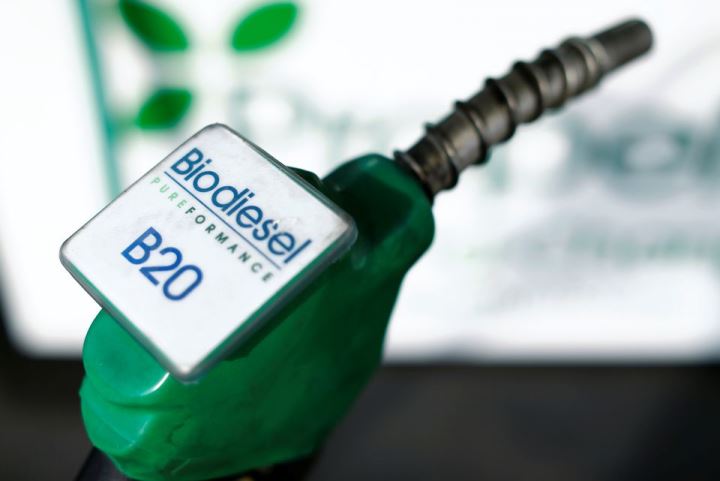
A fuel nozzle from a bio diesel fuel pump is seen in this photo illustration taken at a filling station in San Diego, California January 8, 2015.
A dairy farmer and chemical engineer in Louis Trichardt is urging businesses and households to reduce reliance on fossil fuels by harvesting gas from recycled materials.
This comes as South Africa faces rising fuel prices, with the maximum retail price of paraffin now exceeding R27 in both coastal and inland areas.
Tobias Fourie produces methane gas from cow dung to power boilers used in his dairy operations.
Fourie says the process is cost-effective and reduces carbon emissions.
“Bio-gas from cow dung contains over 50 percent methane which produces clean burning gas. The cow dung is broken down in an anaerobic digester to harvest the biogas. Fourie says they harvest and store millions of cubicles of gas on the farm…” Fourie says.
Young climate activists calls on the government to find alternative fossil fuels
“The methane gas comes from the waste of the animals and the waste of the factories when we process the milk into dairy products. So when that waste comes back it goes into a big digester and here the bacteria growth creates methane gas. That methane gas we pump again back to the factory where we create heat in our boilers that we use to process the milk again into dairy products,” Fourie adds.
He says the system has helped reduce dependence on paraffin.
“It is all about replacing fossil fuels. Our boilers used to run on paraffin and now some of them are still on paraffin because we do not have enough gas yet but we are replacing paraffin with gas.”
Fourie has encouraged households that rely on paraffin for cooking and lighting to consider biogas solutions.
More than 500 000 households in South Africa use paraffin as a primary energy source.
Meanwhile, the University of Venda has introduced a programme to provide households with gas pumps and training to produce biogas from organic waste.
Fourie says, “They have a very good programme to teach people how to make biogas at home. So they have built small digesters where they can throw their food waste and stuff and harvest methane gas and cooking with that gas.”
He says biogas is also a safer alternative, as it does not explode.