-
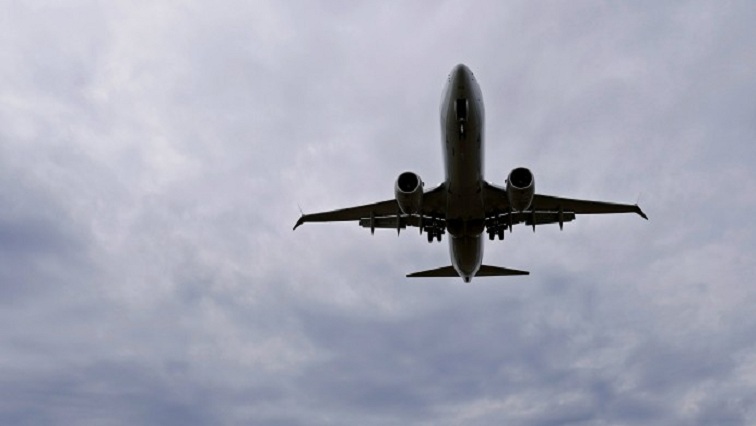
An image of an airline flying over.
The South African Civil Aviation Authority says the aviation sector is equipped to manage changing weather conditions affecting parts of the country.
Inclement weather continues to impact the Western, Eastern and Northern Cape, with strong winds and heavy rain reported in several areas.
CAA Executive Poppy Khoza says the aviation system is designed to operate under complex conditions.
Khoza says, “Civil aviation is built around those complexities, including adverse weather conditions and so on, but the system is designed equally to withstand and/or have an ability to navigate within those complexities.”
“One of the things that I can say is that when the weather is adverse such that an aircraft is unable to take off, the pilot is able to take a decision, assisted by the air navigation service provider and, in this instance ants, so there are a lot of checks and balances in the system that are built to ensure that aircraft when they navigate through these adverse weather patterns, they do so safely,” Khoza adds.
Khoza was speaking on the sidelines of the 2026 National Aviation Conference in Kempton Park, east of Johannesburg.
Weather warnings issued – Meteorologist Joel Guy shares more
Meanwhile, concerns have been raised about the sustainability of the airline industry due to rising jet fuel prices and supply security risks.
Industry stakeholders say the cost of Jet A1 fuel has more than doubled following geopolitical tensions involving the United States, Israel and Iran, as well as disruptions linked to the closure of the Strait of Hormuz.
Chief Executive Officer of the Airlines Association of Southern Africa, Aaron Munetsi, says the supply of aviation fuel remains a critical issue.
“The security of supply of the lifeblood of our industry is aviation fuel. The security of supply has been actually tested to the max because there is very little that is we can do to make sure that the the supply continues to come. So, we are here to talk about it and say as an industry not only in South Africa but in the southern Africa region – what can we do to make sure that we at least have a sense of clarity where we’re going to get this supply of fuel from experience,” Munetsi says.
Chairperson of the Board of Airline Representatives of South Africa, George Mothema, says the situation could affect the sector’s recovery.
“It’s a concern and a risk that we always have to bear in mind and that risk is based on the experience we had around COVID… domestic capacity was reduced because we lost three carriers at that point in time… you’re now sitting with jet fuel obviously because of the geopolitical issues in the Middle East as the biggest operating cost into their businesses,” Mothema says.
Chief Executive Officer of Airports Company South Africa, Mpumi Mpofu, has called for a coordinated industry response.
“What I was advocating is for the establishment of what is a aviation and aerospace master plan. It doesn’t require legislation. It is led by the Department of Trade and Industry and Competition to collaborate, plan, get rid of the policy blockages, determine investment programmes, set targets for delivery and determine what funding is required.”
Authorities say South Africa currently ranks seventh globally on aviation safety standards, reflecting progress in the sector despite ongoing challenges.
Aviation sector concerned by fuel price spike