





-
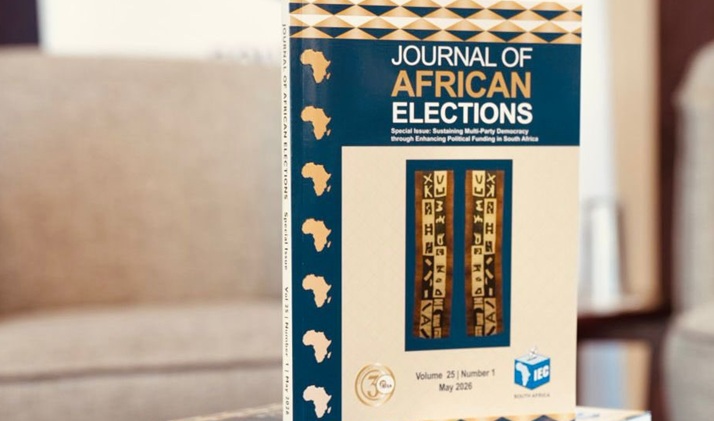
On 6 May 2026, the IEC, in partnership with the Electoral Institute for Sustainable Democracy in Africa – EISA, launched the first issue…
The Electoral Commission of South Africa says its newly launched journal on African elections aims to improve public understanding of political funding and its impact on democratic governance.
The commission launched the publication in partnership with the Electoral Institute for Sustainable Democracy in Africa (EISA) in Johannesburg.
The initiative comes as the disclosure threshold for political parties has been increased to R200 000, while the donation cap to political parties has been raised to R30 million.
The print edition of the journal will be distributed to higher education institutions, libraries, community libraries and community centres.
An online version is also available through the commission’s official platforms and the EISA website.
The commission’s Victor Shale says regulating political funding remains a complex issue.
Shale says, “Regulating political funding is always going to be quite a tricky business. You have to walk the tightrope, meaning you’ve got to ensure that political organisations are adequately financed to carry their public representation mandate. But you also then have to guard against undue influence of money in politics”.
“In the past, political parties used to be funded solely from membership fees. But now with increased party political competition, we still need to be wary of who then is making up for the difference in the funding,” Shale adds.
The commission says the publication is intended to contribute to broader discussions around transparency, accountability and democratic governance.
The launch of a new Special Issue of the Journal of African Elections (JAE) marks an important contribution to policy and scholarly debates ahead of South Africa’s 2026 Local Government Elections.
On 6 May 2026, the IEC, in partnership with the Electoral Institute for… pic.twitter.com/BjdEmR8zi1
— IEC South Africa (@IECSouthAfrica) May 6, 2026