


-
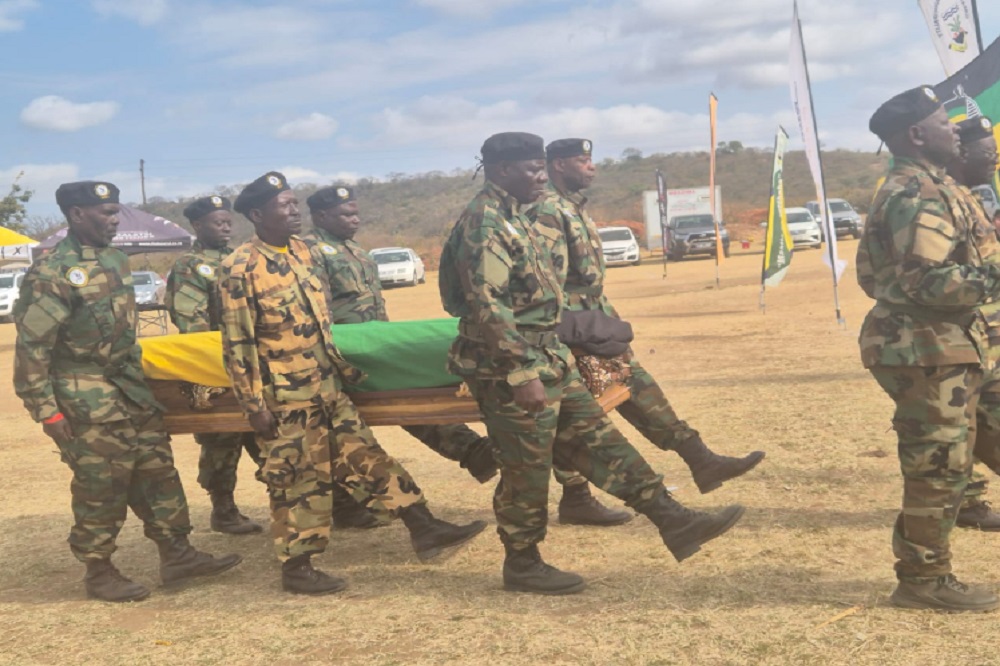
Soldiers carry coffin of anti-apartheid activists hung in 1986 in Pretoria and buried in paupers’ graves in Mamelodi.
The families of two anti-apartheid activists from Ga-Maupa village outside Giyani in Limpopo are calling for justice, nearly four decades after their loved ones were executed by the apartheid government.
Alex Matsepane and Solomon Mawasha, who were members of the United Democratic Front (UDF), were hanged at Pretoria Central Prison, now known as Kgosi Mampuru II Correctional Centre, in 1986 and were given paupers’ burials.
They had been convicted of leading a protest against the imposition of tribal authorities.
The families are now pinning their hopes on the TRC Cases Inquiry.
They say, “It was not an easy journey, but the government helped a lot to help us bring back the remains of our loved ones to properly bury them. What happened is that they came and took us to Pretoria to see where they were buried by the Apartheid government. That’s the only challenge that we experienced in the whole process…As a family, we feel that the government has done enough because we were not going to manage to take the remains of our children in Mamelodi. They did everything necessary to help both families so that we get closure and bury them close to home. We are now going to be able to show even the next generation where their grandparents and uncles are buried.”
Furthermore, the families also say they were never compensated except for being given R21 000 each for reburials.
“They were the ones who went to school, and the families were still expecting them to raise their children and support them. The Matsepane and Mawasha families are the way they are today because these leaders and potential breadwinners left while they were still young. They never had a chance to work and support their parents.”
“It would be very helpful if the government could compensate their families so that they can at least find some closure and forget the trauma they’ve gone through over the years. The government can compensate the families so that even their parents find closure, knowing that if they were still alive, they would be supporting them and taking care of them. At least an RDP house would mean a lot to them, as they are struggling. If the government can do that, I think it would bring closure to the families.”
RELATED VIDEO | Families seek justice for apartheid executions: