


-
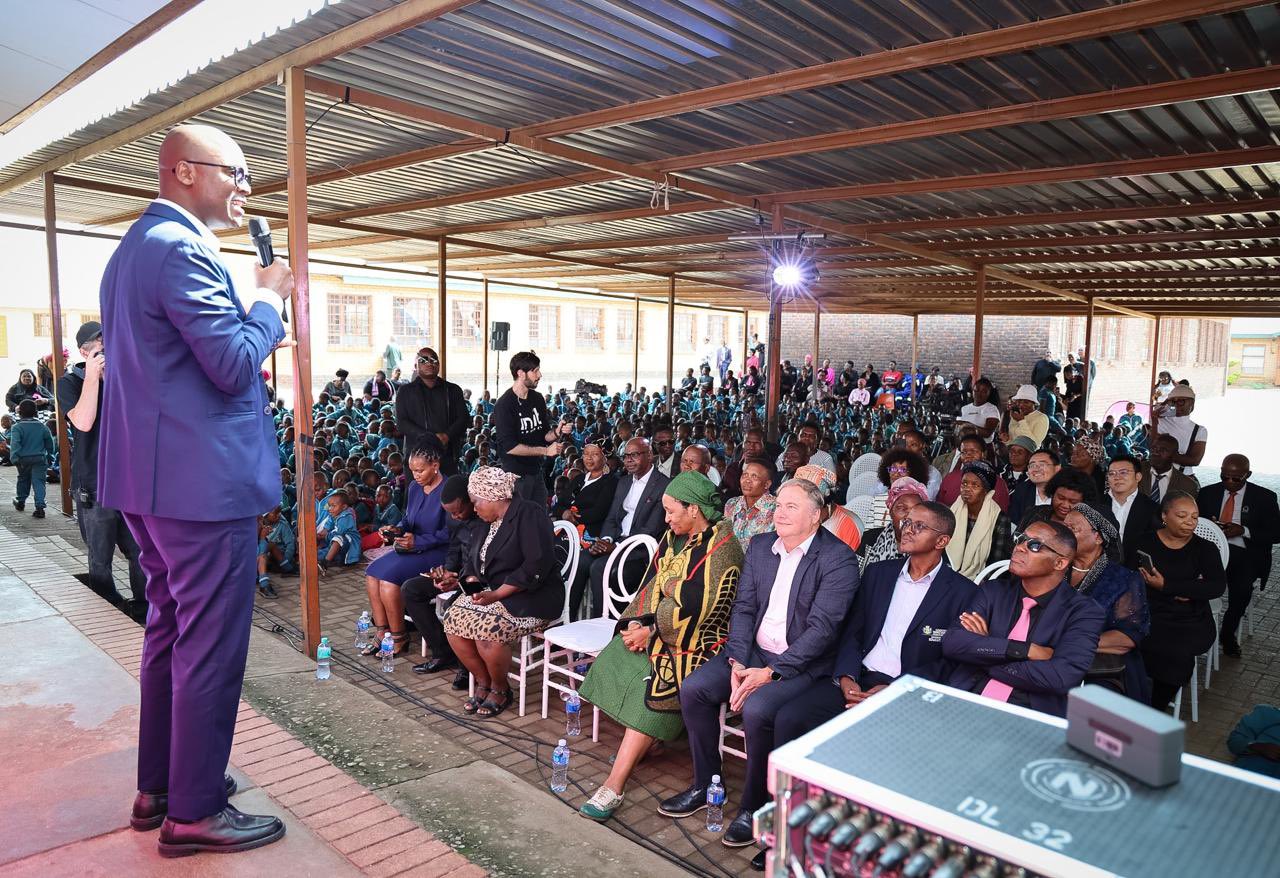
Minister SollyMalatsi at the 1000 connected schools initiative, bridging the digital divide and unlocking opportunities for every learner.
The Minister of Communications and Digital Technologies, Solly Malatsi, says progress has been made in developing a national Artificial Intelligence policy.
The policy aims to promote innovation while addressing ethical concerns and managing risks associated with AI.
Malatsi says consultations on the draft policy are ongoing, with the document open for public comment until June 10.
“It is currently open for public comment until the 10th of June to allow South Africans to make their contributions. Our point of departure is that the evolution that happens with AI is happening rapidly, and we can’t live in a policy vacuum for a long time… we are already way behind other parts of the world, so we want a policy framework that will be representative of what our society wants to reflect,” said Malatsi.
The update comes as the department, in partnership with Maziv Group, marked the connection of the 1,000th school to high-speed internet.
Molamo Primary School in Ga-Mothapo village, east of Polokwane in Limpopo, is the latest beneficiary.
Malatsi says connectivity is critical for development.
“We know the power of connectivity. It is to connect people to opportunities for a better life, to connect learners here to learning material, and to be able to also do their work digitally. The environment and the economy that we live in mean that access to connectivity has become the oxygen to compete for opportunities, so this just also simplifies the partnership between government and this, and government is continuing with its own effort, but we are also commending the private sector wherever it’s doing well and doing the work,” he said.
School principal Malesela Tlakula welcomed the development.
“We are over the moon. We are very happy to receive connectivity from Vuma, and we are sure that our school, in terms of getting curriculum support, will improve and learners’ performance will also improve, and we are very happy for it,” said Tlakula.
A learner at the school says access to the internet supports classroom learning.
“The internet is very useful because we can search things, we can research through the smart boards as our teachers teach us, because we learn through the smart boards and having this wi-fi connection is very good because is everything we can have,” the learner said.
Maziv Group CEO Dietlof Mare has called on the private sector to support similar initiatives.
“It’s challenging, but it’s possible, you know and what we want to ask other companies doing fiber is to do the same, because I think the objective is to connect every student in South Africa, because if you really look at the digital divide today, it’s not just digital divide in South Africa, it’s really making our kids compete with the rest of the world,” said Mare.
The government says more schools will be connected as part of efforts to bridge the digital divide.
Molamo Primary School was established by community members in 1994, starting with just two teachers.
We went to Molamo Primary School in Polokwane with @vumatel to mark the 1000th school connected to the internet and later joined the Association for Progressive Communication for the final session of their their policy workshop small scale internet service providers.… pic.twitter.com/WR7dJfqz6v
— SollyMalatsi (@SollyMalatsi) April 16, 2026
With Minister @SollyMalatsi at the centre of this transformative vision, government and industry are working hand-in-hand to empower the next generation and build a digitally inclusive South Africa. #DCDT #DigitalTransformation #SAConnected pic.twitter.com/M3PQdHM1ri
— Dept of Communications & Digital Technologies (@CommsZA) April 16, 2026