




-
Women on Farms Project says many women farm workers remain vulnerable due to insecure employment and housing conditions.
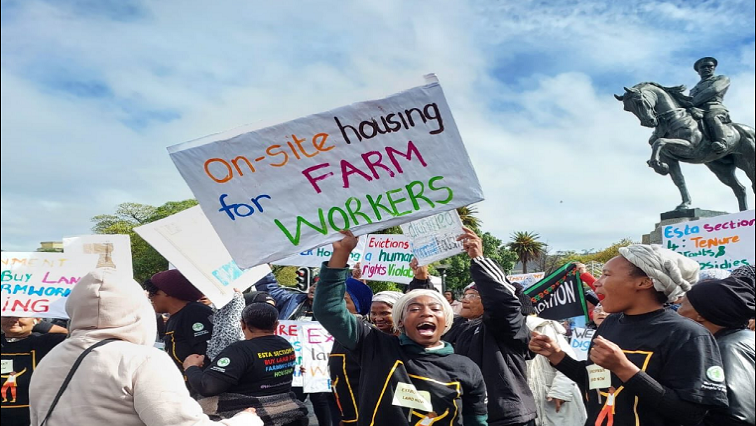
A group of women farmworkers in the Western Cape say they have little reason to celebrate this Freedom Day. Decades after the advent of democracy, they are raising concerns about evictions, landlessness, and insecure land tenure.
They marched to Parliament calling for urgent land reform.
For these women, Freedom Day is not a celebration. It is a reminder of what has not changed. Some say more than thirty years into democracy, they remain landless, face evictions, and have no secure rights to the land they live on.
“We are scared because there are many people who do not work there, but their partners have passed away. If they succeed in evicting Bradley, tomorrow it will be someone else. We are not safe. If they get it right to evict one person, they will do it to others. We just want land so that we can live and farm, and take care of ourselves,” says farm dweller, Johanna August.
Many of these women have spent their entire lives, living and toiling on these lands.
“I was born on farm, my parents worked for 30 years, I grew up there, went to school from there and also worked on the farm. I worked for 10 years. I started in the fields and then became an administrator in the office. This was my life,” says another farm dweller, Angelique Stevens.
Angelique and Johanna are among hundreds of women living with the daily uncertainty of losing their homes on farms, where even basic services and security of tenure remain under threat.
Women on Farms Project Co-Director, Carmen Louw says many women farm workers remain vulnerable due to insecure employment and housing conditions.
“Women are seen as secondary workers, and occupiers on farmers, they are only seasonally employed which means for large part of the year economically dependent on male partner. They experience seasonal hunger and the same with their tenure rights on farms. the housing contract is on the name of the male permanent worker, which means if that male worker dies or if the women divorces or takes out a protection order against male partner they face eviction from farm. When a farmer evicts her she often ends up on the street or informal settlement,” says Louw.
The group is calling for land redistribution and for public land to be used to secure housing for farm workers.
“They have delivered many memorandums over the years to minister of land reform , and they yet to receive land or meaningful legislature that will effect land redistribution although there constitution regulates or mandates land reform there is no act that guides land redistribution and we feel that they as generational workers of land they should benefit,” she adds.
Until then they say Freedom Day does not reflect their reality.
RELATED VIDEO | Farming sector | Transformation for women’s labour and human rights