


-
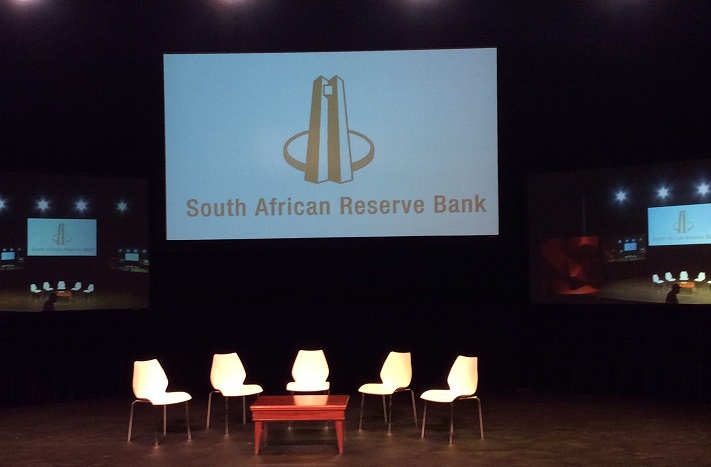
The stage is set for South African Reserve Bank’s Monetary Policy Forum to the People in April 2017.
The South African Reserve Bank’s (SARB) Monetary Policy Committee (MPC) raised the policy rate by a quarter of a percentage point to 7 per cent, effective 29 May.
The prime lending rate now stands at 10.5 per cent.
The decision was supported by four of the six committee members, with two preferring no change.
The bank cited upward risks to the inflation outlook, linked in part to the ongoing conflict in the Middle East, which has pushed up oil prices and contributed to higher fuel costs in South Africa.
Inflation rose from 3.1 per cent in March to 4 per cent in April.
SARB Governor Lesetja Kganyago said inflation is expected to average 4.4 per cent this year.
“New results from our main survey of inflation expectations will only be available next month. However, market indicators and analyst expectations are edging higher. Given the forecasts, we see upside risks to inflation. Against this backdrop, the committee decided to increase the policy rate by 25 basis points, to 7%, effective from 29 May. Four members preferred this action, while two favoured no change,” Kganyago said.
“The committee agreed that inflation risks had intensified, and that the challenge of large and overlapping shocks would likely trigger second-round effects, requiring a monetary policy response,” he added.
Household debt, Inflation and Higher fuel prices:
The SARB warned that the local economy faces a difficult combination of higher global uncertainty and reduced disposable income, both of which will weigh on investment and household consumption.
Kganyago said a worst-case scenario could result in three interest rate hikes this year, driven by higher food inflation, an extended blockade in the Strait of Hormuz, and adverse weather threatening crop production.
“The food is not so much that we have had a food shock, but we expect that to be coming because of the following. Firstly, we’re lucky that the summer planting season for the crops was already over before the shock. The winter crop will fill it, but agriculturists tell us that they are not as demanding on fertiliser as the summer crops are. So if there is indeed a food shock — that’s why we modelled the El Niño — that will be an additional shock,” Kganyago said.
Analysts warned that the rate increase will place additional pressure on consumers and small businesses. Managing Executive at Nedbank, Oscar Siziba, said the timing was particularly difficult.
“An increase in interest rates will put more pressure on businesses because it means their loan repayments will go up at a time when many are already dealing with high fuel and running costs. This is going to put extra strain on cash flow, especially for smaller businesses. At the same time, consumers are also under pressure, which means slower sales for businesses, so you’ve got rising costs on one end and less income coming in on the other hand. In this kind of environment, businesses are likely to be more cautious, focusing on controlling costs and being careful about expanding or hiring,” Siziba said.
The SARB confirmed there will be no changes to the newly adopted 3 per cent inflation target, despite the volatile global environment and rising price pressures.
SARB hikes interest rates