




-
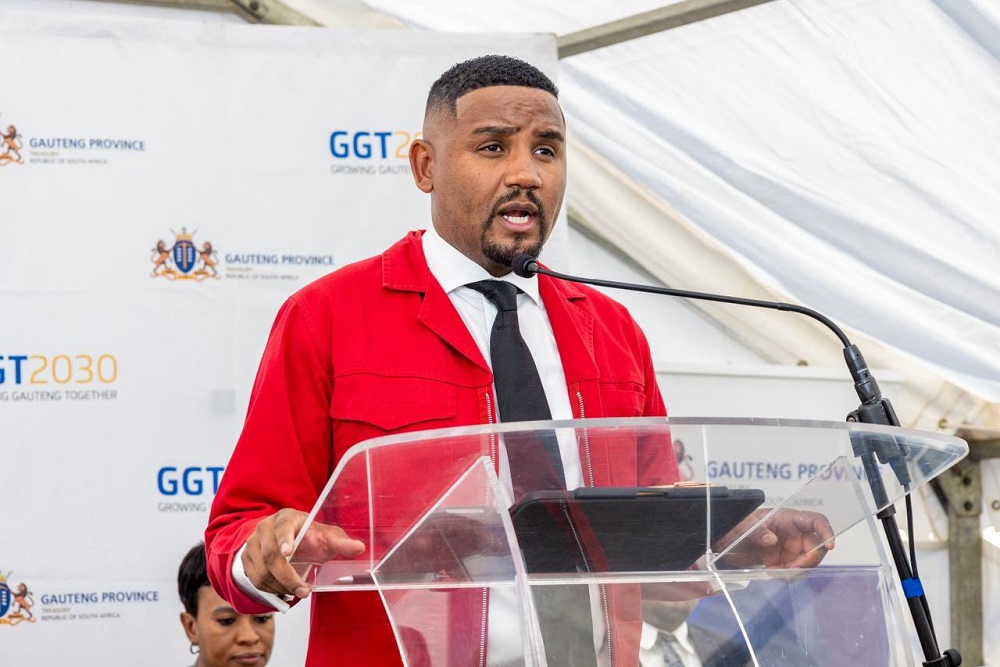
Gauteng Finance MEC Nkululeko Dunga briefs the media on the province’s financial standing on 14 May 2026.
Gauteng Finance MEC, Nkululeko Dunga, has painted a worrying state of finances in the province, citing unauthorised spending patterns and departments underspending their budgets.
He was delivering the provincial state of finances and outlining strategic priority areas, where he announced an urgent province-wide assessment of unpaid invoices and other outstanding accounts.
As of the end of March 2026, total provincial accruals stood at approximately R9.3 billion.
Dunga says the province has also received a letter from Finance Minister Enoch Godongwana, threatening to stop the provincial equitable share allocation if it doesn’t address billions in inter-governmental debt.
“We have received correspondence from the Minister of Finance indicating an intention to withhold portions of the provincial equitable share relating to intergovernmental debt obligations amounting to approximately R1.9 billion, including over R808 million outstanding for more than one year. As at March 2026, provincial government debt owed to municipalities stood at approximately R2.64 billion, whilst municipalities themselves owed the province approximately R2.5 billion, largely linked to motor vehicle licence revenue. The reality is that this situation cannot continue indefinitely through payment arrangements, debt rollovers and administrative interventions that merely postpone the crisis for future generations to come.”
This comes as the province continues to face serious revenue collection pressures, which the MEC says are steadily weakening the fiscal position of Gauteng.
“The 2025/26 financial year appropriated own-revenue target amounted to approximately R8.41 billion. However, actual collections at the end of March 2026 amounted to approximately R7.08 billion, resulting in an under-collection of approximately R1.28 billion, equivalent to about 16% below target. The largest under-collections were recorded in Roads and Transport, Economic Development and Gauteng Provincial Treasury itself.”
One of the most serious financial and governance challenges, according to the Gauteng finance MEC, is the continued growth of accruals, unpaid invoices and unrecognised expenditure commitments across provincial departments.
“The direct consequence of this situation is collapsing businesses, job losses, weakening local economic activity and declining confidence in the state’s ability to honour its obligations on time. As at the end of March 2026, total provincial accruals and payables not recognised stood at approximately R9.3 billion, with more than R4.9 billion already exceeding 30 days. The reality is that some departments have effectively normalised operating beyond their financial capacity through over-commitments, delayed invoice processing, poor contract management and weak expenditure controls,” Dunga stresses.
The MEC says disheartening is the slow pace of service delivery and underspending on the conditional grant. Although he has made commitments to turn things around, Soweto Community Activist, Shelly Nhlapo, says she hopes taking the address to Dube Hostel was not an electioneering gimmick by the MEC.
“It’s no secret that when it’s election season we turn to see politicians coming to give all sorts of promises and doing what they should be doing all along. We are in a dire situation, we are in a dire state at times we feel like we don’t even have a government, funny enough he decided to choose this spot next to an infrastructure that is falling apart and has been falling apart God knows for how long that is now a community hazard.”
The provincial treasury will now intensify intervention measures through MFMA Sections 138 and 140 to help Emfuleni, Sedibeng, Lesedi and Merafong municipalities that have been highlighted as facing serious financial distress, deteriorating governance and persistent breaches of their financial obligations.
The MEC explains, “The target remains that of doing things by the book, with the Immediate being the strengthening of financial controls, increased oversight and consequence management. Talks continue with the National treasury that has its sights set on Gauteng and its municipalities.”
City of Joburg finances
Meanwhile in the City of Johannesburg, financial challenges have intensified following a strongly worded letter from Godongwana to Executive Mayor Dada Morero.
The letter raises concerns about what has been described as an unfunded or “fictional” budget, a reported R25 billion debt burden, liquidity pressures and allegations of unlawful financial commitments.
At the centre of the concerns are possible breaches of the Municipal Finance Management Act, which governs financial management and service delivery within municipalities.
National Treasury says the city owes creditors R25 billion while having only R3.9 billion in available cash.
COJ financial crisis | Morero clears the air over Joburg’s finances: