



-
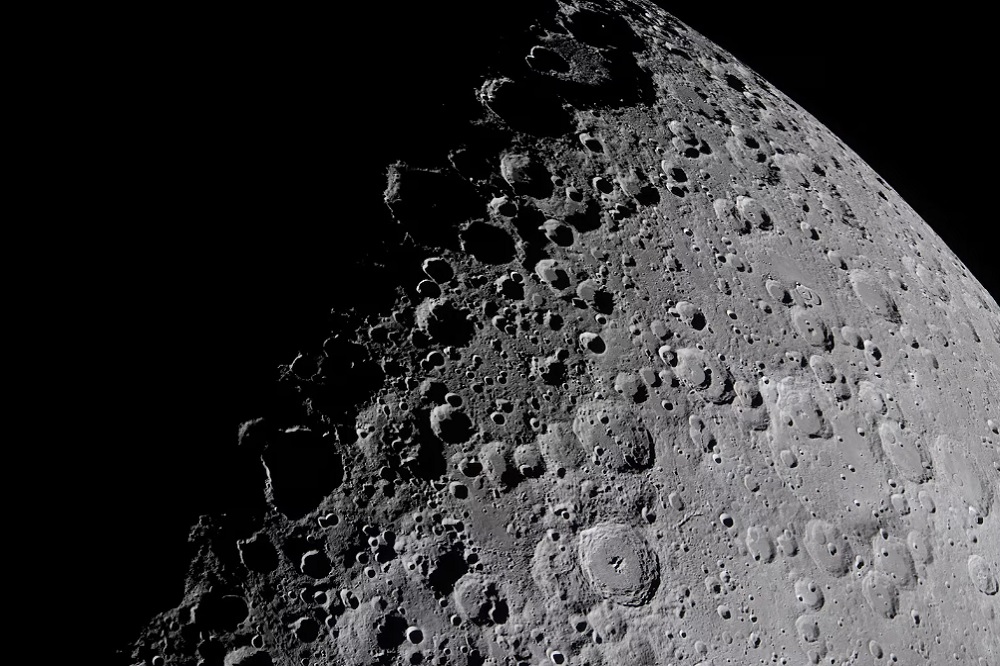
A view of a portion of the Moon in what NASA describes as “along the terminator, the boundary between lunar day and night, where low-angle sunlight casts long, dramatic shadows across the surface” during the Artemis II crew’s flyby of the Moon, April 6.
The South African National Space Agency (Sansa) says it worked tirelessly to help ensure the success of Nasa’s Artemis II space mission.
Sansa, an entity of the Department of Science and Innovation, provided tracking, telemetry and data support to the American space agency from its ground station at Hartebeesthoek during the mission.
On Monday, four Nasa astronauts flew deeper into space than any humans before, breaking a long‑standing distance record during a fly‑by around the moon.
The spacecraft travelled around the far side of the moon, an area not visible from earth, before beginning its return journey.
Only 12 astronauts have ever walked on the moon during the Apollo era.
Artemis II is the first crewed mission to the moon region in more than five decades, marking humanity’s return to deep space exploration since the Apollo programme ended.
“In our preparation for the mission, we primarily looked at making sure that our antennas are in a healthy state. So, looking at all the subsystems, making sure everything is working according to its specifications. For the one-way, Doppler measurements, future to accuracy is extremely important. So, we make sure that all our equipment is synchronised to our time standards, which is typically a caesium clock or a hydrogen major, which provides us with the types of accuracies required to do those measurements. We have a team ranging from engineers to technicians,” says Sansa Chief Engineer Eugene Avenant.
The Artemis II crew captured this image showing the rings of the Orientale basin during their lunar flyby on April 6.
At the 10 o’clock position of the Orientale basin, the two smaller craters – which the Artemis II crew has suggested be named Integrity & Carroll – are visible. pic.twitter.com/na5yOROl1z
— NASA Artemis (@NASAArtemis) April 7, 2026