

-
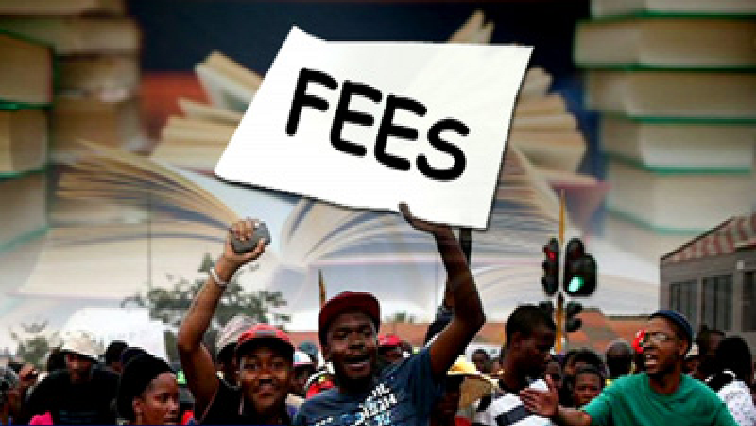
[FILE IMAGE]: A student holding up a placard during the fees must fall protest.
As institutions of higher learning prepare for the 2026 academic year, the issue of student debt remains a thorny one. Discussion is currently underway about the envisaged Student Debt Relief Bill, which the EFF has proposed.
One of the former students from the Cape Peninsula University of Technology who still owes fees is Buhle Buqa.
Buqa says she has completed her studies, but is unable to get her certificates.
“I am a graduate in Cape Town. I have completed my qualification but I have not been able to gain my certificates and my academic records because of my student debt. I am just sharing my story to highlight how student debt continues to affect young people long after they have finished studying. I work so hard to complete my studies believing that finishing my qualification would open doors to employment and stability like many other students who are coming from a family where paying fees was easy, but I push through with the hope that education will change my life,” says Buqa.
However, some student organisations have expressed mixed feelings about the proposed Student Debt Relief Bill.
Gilbert Monnanyana from the Democratic Alliance Student Organisation (DASO) says, “We have institutions that currently exists in space. We should not be proposing to assists people to be able to graduate or to receive a qualification. We need to go back. First and foremost the bill does not speak to what criteria of individuals are allowed to apply. We need to take into account that not everyone is a beneficiary of NSFAS. And some students who come to universities are gonna come either, they are able to pay for themselves, some are gonna come through bursaries from private companies, some from government sub sectors across the country and of course, mainly NSFAS. So, the bill does not speak into that. So, we cannot have a bill that seems to squeeze in for all situations.”
Ssaco NEC member, Tarik Lalla, says education has been commercialised.
“Well Sasco’s assessment of student debt is systemic of the funding model and it’s not in fact a temporary problem. The primary issue here for us is that the higher education is commercialised. And we now have developmental system which is now commercialised. Higher Education must not be a product to be bought and sold. In fact, it should be a developmental system to liberate society from poverty, inequality of historical contemporary injustice. So, student debt has been understood to be a historical, which has been accumulated for decades of under funding outsourcing and obviously institutional accumulation of wealth.”
EFF MP, Sihle Lonzi, says the bill will solve the challenges faced by students as a result of outstanding fees. He says the bill is yet to be tabled in Parliament and undergo the necessary parliamentary processes.
“If you can spend billions bailing out corruption, why do you not bail out the youth of South Africa? So, the government is going to fill that gap. And there are many other sources of income, which we have seen, which we are going to list in the bill whether it’s going to redirect some of the skills. Whether it’s through redirecting the SETAs as they underspend skills fund. But also even some of the institutions as well, which have some of the reserves as well as to facilitate one fund which is going to the clearance of student debt.”
WATCH | NSFAS has announced that from 2026, payments will go straight to accredited service providers instead of being routed through institutions or middlemen. pic.twitter.com/cUZnSqXeNv
— SABC News (@SABCNews) January 6, 2026