

-
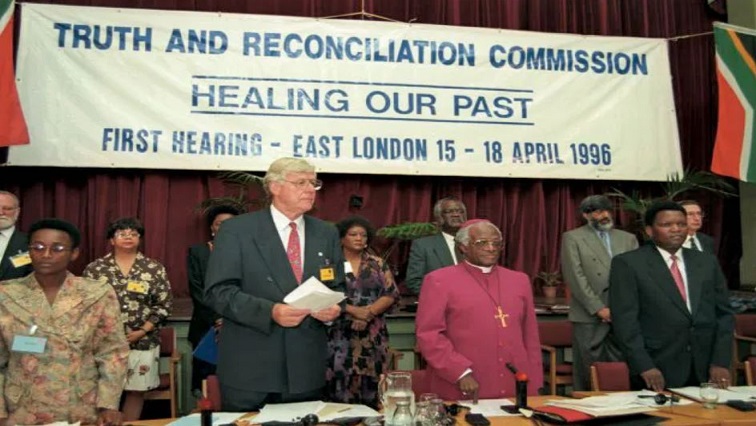
File: Members of the Truth and Reconciliation Commission (TRC) Deputy Chairperson, Dr. Alex Boraine Chairperson, Archbishop Desmond Tutu (centre) and Commissioner, Rev. Bongani Finca (right), commissioner at the first hearing in East London, Eastern Cape on April 1996.
Thirty years ago, South Africa witnessed the first hearings of the Truth and Reconciliation Commission.
The TRC was established in 1996 to promote reconciliation and uncover the truth about severe human rights violations that took place under the apartheid regime from March 1960 to May 1994.
During the apartheid era, the National Party regime committed atrocities, which included murder, torture and enforced disappearances. However, that did not deter the oppressed people from fighting for their freedom.
In 1966, the United Nations General Assembly declared apartheid a crime against humanity.
During the negotiations to end apartheid, it was agreed that reconciliation was essential to guarantee a non-racial democracy and ensure stability. This led to the establishment of the Truth and Reconciliation Commission, chaired by the late Archbishop Desmond Tutu.
The first TRC hearings were held in the Eastern Cape. These were intensely emotional and often tearful amid harrowing and detailed testimony.
The investigation team had its work cut out for it. The security cluster of the then government had destroyed some of the evidence. For the victims, they had to relive the trauma. In different provinces across the country, similar hearings were conducted.
TRC 30 | Reflecting on 30 years of the TRC
The perpetrators also presented their case. Some were subpoenaed to appear before the commission, which offered conditional amnesty for the gross human rights violations committed, provided they made full disclosure of politically-motivated crimes.
The TRC identified homeland security structures as key elements in the state’s strategies involving gross human rights violations. Some parties in the former homelands tried to push back. The Inkatha Freedom Party made a statement at the commission.
Former liberation organisations such as the African National Congress and the Pan-Africanist Congress (PAC) were also called to account after being accused of human rights violations.
In 1998, the commission presented its final, five-volume report to then-President Nelson Mandela.
It was now the responsibility of the Department of Justice and Constitutional Development to implement the recommendations of the TRC.
The scars are still visible. The old, dark days have passed; however, the victims and their families still remember the horrific experiences.
Reparations were key in the commission’s recommendations. President Cyril Ramaphosa says the government is committed to implementing the TRC recommendations.
Related video | President Ramaphosa to officiate TRC Housing Assistance Reparations launch