



-
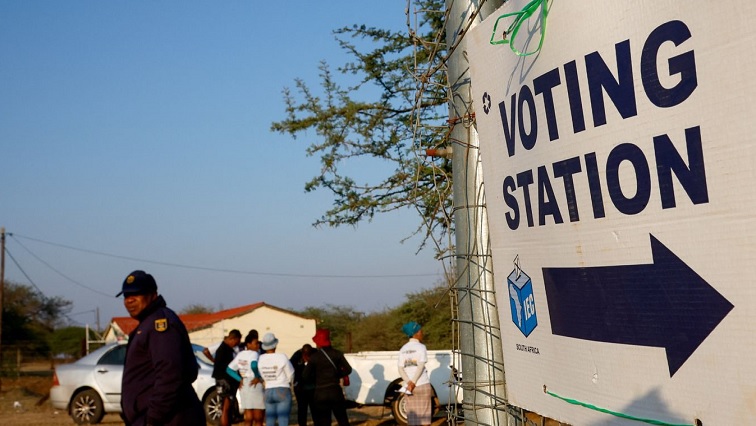
A police officer seen outside a voting station
The Electoral Commission (IEC) is expecting over 4 400 municipal wards that will participate in the next Local Government Elections (LGE).
This comes after the Municipal Demarcation Board officially handed over the final electoral wards to the IEC, for the 2026/27 local elections, and this paves the preparations roadmap to the next municipal elections.
Meanwhile, political parties have been advised to consolidate their nomination and candidate lists by the end of June next year to ensure compliance. The elections are due to be held between November next year and January 2027, with the final election date to be proclaimed by the CoGTA Minister.
For the upcoming 2026/2027 local government elections, the IEC revealed that there has been a slight increase in the overall number of wards in the country.
Chairperson of the Municipal Demarcation Board Thabo Manyoni says communities were invited to submit proposals on how their wards should be configured.
He says they were also mindful to ensure that most wards remain the same as in the previous local elections. Manyoni expressed confidence that they have covered all the critical areas to ensure the IEC is able to work with communities in delivering elections that will be free and fair.
“This process of course for these elections now, it started early last year. We went out to communities just for an awareness programme, where we were indicating to communities what basically MDB is all about, what this process will be entailing and so forth. So, we started with that process, I can indicate for now we’ve worked with more than 4 470-something wards in the country and of course we received lots of objections, more than 2 000 I think also, where people were not happy with one area or not and so forth.”
Manyoni further says that there are objections that still haven’t been finalised because they are still before the courts.
“In terms of the objections that we’ve received, we tried by all means to accommodate whatever that was said and make sure that at least we stick with some of the concerns. I must indicate there are some of the objections that we didn’t agree with, relatively speaking it’s a very small amount of areas that were changed, varied and so forth. There are two areas in KwaZulu-Natal which are in court at the moment, they’re going to be resolved I must indicate.”
IEC CEO Sy Mamabolo says after the Demarcation Board handed over the revised wards to them, the first critical activity they needed to do, was to assess the impact of those final wards and make a final determination on whether these new wards encroach on the existing voting districts. Mamabolo says the handover constitutes a great milestone towards the preparation of the upcoming local government elections.
“We’ll be looking at these wards. Of course, we’re aware that there are there’s still litigation in uMkhanyakude District in KZN as well as eThekwini, so those will be excluded from what we received today. We’ll look at these wards and see whether they impact any voting district and if they do, we will be engaging with local party liaising committees to ensure that we have some resolution. There has to be special focus in KZN, in eThekwini as well as in uMkhanyakude precisely because of the on-going litigation.”
Meanwhile, Minister of Cooperative Governance and Traditional Affairs (CoGTA) Velenkosini Hlabisa has acknowledged that the demarcation of wards is a complex exercise. Hlabisa believes the ceremony is a pivotal constitutional moment and a practical milestone. He says the handing-over marks the beginning of the process for the IEC to start with the registration process for voters among others.
“We also acknowledge candidly that demarcation is a complex exercise, and that it sometimes produces unease or even unhappiness in affected areas. The MDB’s process included extensive awareness-raising, technical consultations, and nationwide public engagement, from the education drive beginning in mid-2024 through the municipal planning sessions and the April-June 2025 public meetings, to the publication of drafts and the objection windows.”
Hlabisa further indicated that the current municipal electoral term expires on November 1st next year and emphasized that the upcoming local government elections must therefore be held between November , 2026, and January 30th, 2027.