


-
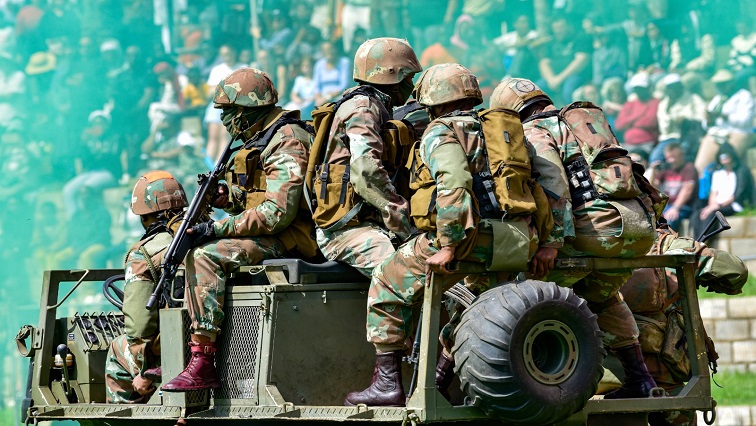
SANDF soldiers.
The well-being of the country’s soldiers deployed in peacekeeping missions such as the Democratic Republic of Congo (DRC) has had a negative impact on their lives. That’s according to primary research conducted by the Department of Sociology at Stellenbosch University.
The research’s findings were presented to the Joint Standing Committee on Defence on Friday.
The research investigated the experiences of the South African Defence Force (SANDF) members when on both domestic deployment and also outside the country.
The research found that SANDF operational capabilities are poor. One of the co-chairpersons of the committee, Phiroane Phala, spoke on the purpose of the meeting.
“The purpose of today’s engagement is not to criticise the South African National Defence Force but to strengthen it. Oversight must support improvement. Academic research can highlight systemic issues and provide a perspective that may not emerge through internal reporting. The committee is concerned about what many described as a downward spiral in defence, suggesting declining resources.”
Professor of Sociology at Stellenbosch University, Lindy Heinecken, says the interviews they have conducted among the soldiers revealed that the health of members is declining and has a negative impact on their mental health.
She explains about the DRC mission in particular. “But most importantly, the recent deployment to the DRC. It’s classical peacekeeper syndrome, which is that there is a heightened sense of mental health issues as a result of the stresses and also the witnessing of the violence, with the fact that they are experiencing that they are there with the specific purpose to help to protect and save. Yet there is this hostility from the local population. The feelings of helplessness and rage and frustration have a profound impact on their sense of well-being and purpose that they fulfil in terms of their roles.”
The study has also found that there is a communication breakdown between the management and the lower ranks. Heinecken elaborates.
“Several of the troops that we interviewed commented that there is a culture of neglect and indifference to our welfare. They felt that the leadership is tone deaf and does not care about the suffering of the troops on the ground and their lives do not matter. They spoke of the disconnect with the leadership. They said that even though they would bring to the fore of their commandos what is going to happen, there was unwillingness to actually listen to them, and incorrect command decisions were made as a result of that.”
Professor Heinecken also says the issue of qualifications in SANDF as the only prerequisite needed even if a member has no practical experience is a challenge.
“They were very critical. I supposed this would be officers being in possession because of their qualifications. In other words, they mentioned the master’s degree in HIV management being promoted but without the actual operational experience to conduct operations. And there is a very strong feeling that one must look at when they appoint the commandos on these operations that need necessary experience; otherwise, you have a major lieutenant setback, and the lieutenant took over because it has grade experience.”
The chief of the South African National Defence Force, General Rudzani Maphwanya, gave clarity on the objectives and mandates of different missions.
“But missions are different and unique, and they have a different dynamic. What we discovered in various reports that we received is that the terrains must be appreciated differently. And at the same time, the DRC and the dynamics in the DRC are different from the dynamics in Darfur. The dynamics in DRC in both MONUSCO, which is the UN mission, and SUMI DRC are two different things, and within MONUSCO itself there are distinct things.”
General Rudzani also acknowledged that there are challenges the defence is experiencing but cautioned that they need to be looked at based on the merits of each case.
“How then have we quantified the challenges that our people faced in each and every mission so as to be able to come to a common understanding to say…I am not going to talk about the resource issues because this house has been briefed on several occasions, and we have even indicated that the responsibility lies with our politicians that are currently representing us in these two committees to say, ‘What type of a defence force do you want to have?’ Therefore, in all that we do, we have always tried to come and quantify the challenges, and we have been visible in this house. We have never hidden anything.”
IDEO | SA withdraws troop contribution to MONUSCO: