-
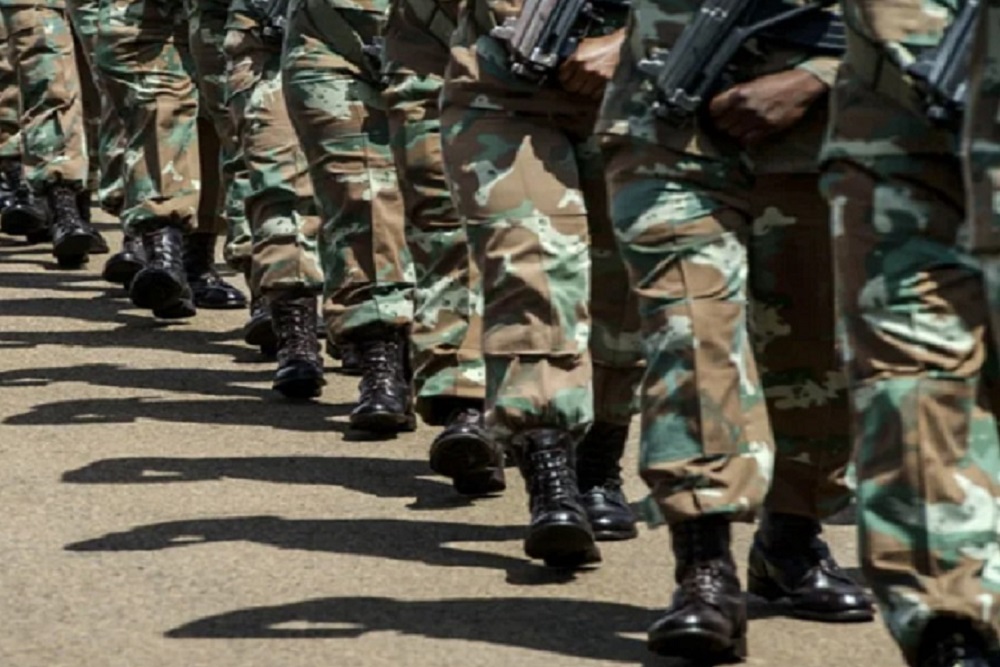
SANDF soldiers.
A former Brigadier General of the South African National Defence Force says the process of merging the South African Defence Force, the independent homelands’ armies, and non-statutory forces was complex, but it brought about unity between former battlefield enemies.
Brigadier General Abel Nelwamondo from Thohoyandou, Limpopo, was one of the key figures in the disbandment and integration of the armies into the new South African National Defence Force in 1994.
South Africa will celebrate Armed Forces Day on February 21st in Thohoyandou.
The process of combining the South African Defence Force, independent homelands and non-statutory forces was a watershed moment, marking a new dispensation in South Africa.
The homeland’s armies included Venda, Transkei, Ciskei and Bophuthatswana defence forces, while Umkhonto we Sizwe and Azania People’s Liberation Army were liberation forces.
A board, comprising members from all the forces, oversaw the process, with the support of the British Military Advisory Training team in Wallmannsthal, near Pretoria.
Following a process of demobilisation, over 95 000 soldiers formed the new South African National Defence Force.
Brigadier General Nelwamondo, who became the national head of training for the newly formed army, says the former armies had to work together.
“Soldiers fight, but fighting does not mean I hate the person I am fighting with. We don’t carry grudges. That is a political issue. we fought, but we, soldiers, came together after the end of the war. So there was no problem working together.”
Members of non-statutory armies were trained in guerrilla war tactics, while their formal counterparts were equipped with conventional war skills.
Vocational skills and basic military training were offered as a necessity.
General Nelwamondo adds, “The issues of skills was not a problem per se. The non-statutory forces were mainly guerilla forces, while the tvbc and the central government armies had conventional training. those who were integrated underwent vigorous training to become part and parcel of the new SANDF.”
A journalist who covered the transition says while the process was commendable, it had its challenges.
Veteran journalist Mathatha Tsedu says, “The integration process unfolded in the same way that the political system of the day unfolded. at a political level, the system remained the same. the anc and the black people were brought to what essentially was a white system of government. even with the forces, the sadf, which was the white army, remained the core of the new force, and the people from liberation armies, such as mk and apla, they were coming from outside. the process of determining the ranks was done by the sadf. people who were senior officials in those armies had to be given ranks by people they used to fight with.”
The South African National Defence Force is the third largest army in Africa after the Egyptian and Algerian armies, with approximately 73 000 personnel.