



-
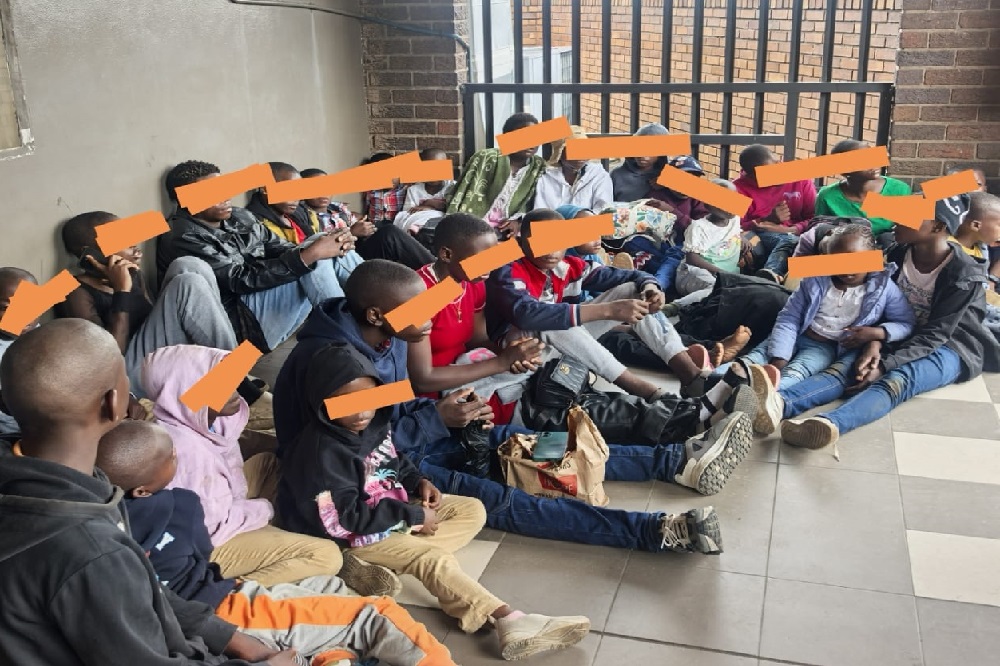
A group of undocumented minors are pictured at the Beitbridge border.
Free State Premier, Maqueen Letsoha-Mathae, has raised concerns over the possible implication of officials in illegal immigration. This follows the interception of a bus carrying undocumented Zimbabwean nationals near Bloemfontein, last week.
The incident has sparked a debate about the effectiveness of border control and internal enforcement failures.
“Most of these people, according to our interviews, initially claimed they were coming from Zimbabwe. However, when we pressed them individually, they admitted to coming from Musina. Many of the same passengers on that bus had expired passports, and when asked how they entered South Africa, they claimed to have passed through a border – which may not be true. This is an area that requires thorough investigation to understand the issues. The central location of the Free State means that many individuals transit through it on their way to their destinations, which is why we often intercept them here,” says Letsoha-Mathae.
SONA 2026 | President Cyril Ramaphosa says illegal immigration continues to pose a risk to the country’s security, adding that additional steps will be taken to strengthen the country’s borders. pic.twitter.com/ycTQsgUDvv
— SABC News (@SABCNews) February 12, 2026
Meanwhile, civil society organisation, South Africans for Constitutional Reform (SACR) says that it is concerned that South Africa may not be able to fully enact the First Safe Country Principle, proposed in the Draft Revised White Paper on Citizenship, Immigration and Refugee Protection (CIRP).
This follows cabinet’s approval of the white paper, marking a major shift in how the country manages citizenship, immigration, and asylum systems.
The principle dictates that asylum seekers passing through safe, stable countries before arriving in South Africa must apply for asylum in those countries first.
Limpopo Premier Phophi Ramathuba says the most effective way to address the influx of foreign nationals entering the country illegally is for citizens to work with government officials. pic.twitter.com/MYsmnrDxND
— SABC News (@SABCNews) January 8, 2026
“Some people, who are against this white paper are saying we’re shutting down our borders altogether, and that’s not the case. The first safe country principle is used everywhere. But I am very concerned because under the current law, we’re not going to be able to implement this principle properly or effectively, because we are still bound by the 1951 UN convention, which we signed with no reservations. But also, not just the convention, but also our constitution which says South Africa belongs to all who live in it. It says once you’re in South Africa, then South Africa belongs to you- that’s how other organisations have been winning cases in court,” says Co-founder of SACR, Princess Mthombeni.
RELATED VIDEO | Influx of immigrants in SA remains in the spotlight