





-
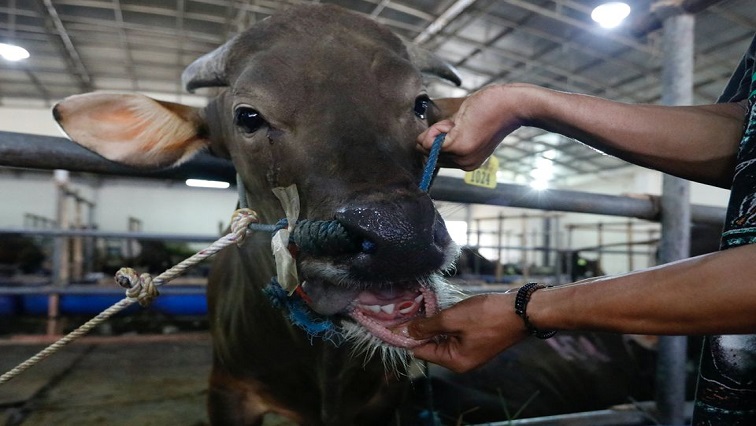
An inspector checks cattle for foot and mouth disease.
A proactive livestock vaccination programme is underway at Fisantekraal (near Durbanville) in the Western Cape to prevent the Foot and Mouth Disease (FMD). This is a risk mitigation vaccination programme that the province is undertaking in the area to prevent the spread of FMD.
Several other areas in the province have already tested positive for the disease.
About 450 cows were subject to vaccination.
VIDEO | Foot and Mouth: Vaccination process underway in Fisantekraal
Authorities say about 500 000 vaccines are needed in the province to fight the spread of the disease. Provincial Minister of Agriculture, Economic Development and Tourism, Dr Ivan Meyer, says the livestock industry is most significant in the province.
Therefore, it is important to act with urgency.
“In a 3km radius right here, we have big dairy farmers, and we cannot lose any of those animals and the industry, because that is a very important sub-sector of the Western Cape. So, we are working very closely with Agri Western Cape, the red meat producers’ organisations, and the NBO, which is the milk-producing organisation. It’s also very important that you work with the private vets, which we are doing. And so, I get excellent cooperation with the local farmers because they have confidence in the government and in our veterinary Services and the local vet,” says Mayer.
VIDEO | Foot and Mouth | Farmers’ calls for urgent distribution of vaccines
https://www.youtube.com/watch?v=7N6yjsl-gJU
Several other areas in the province have already tested positive for the disease. These include farms at Mbekweni in Paarl, Makhaza in Khayelitsha, Mfuleni, and the latest being Klapmuts in the Boland. State Veterinarian in the Boland region, Dr Solomon Bhandi, says although no clinical signs have shown in the livestock being vaccinated in the Fisantekraal area, it is important to conduct preventative measures.
“Protecting here, the vaccinated ones are protected as we vaccinate. Then we are also protecting the spread of the virus in case it comes here. And we know due to the nature of movement of animals and the thread, the chances are in the communal set up it’s just a matter of time that it will get there. So, we then use…what criteria do we then use to say let’s start with this one and this one and this one. It is one reason of the proximity to the big herds. So just around this area we have plus or minus 30 000 cattle around that are in the commercial setup,” says Bhandi.