

-
Sign showing procurement
The South African National Deaf Association (Sanda) says the delay in bringing the Public Procurement Act into force continues to lock disability-owned businesses out of meaningful economic participation in government procurement.
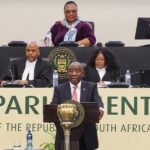
Last year, President Cyril Ramaphosa during his State of the Nation Address (SONA) speech promised to fast-track the regulations to ensure businesses owned by youth and persons with disabilities receive equitable opportunities.
Ramaphosa will address this year’s SONA at Parliament on Thursday evening.
The Sanda’s South African Sign Language (SASL) Facilitator Qiniso Skosana says in practice, government departments still rely on fragmented supply chain management systems that fail to consistently recognise and prioritise disability-owned enterprises.
Skosana says, “As a result, inclusion remains discretionary rather than enforceable. To realise the President’s vision, the act must be gazetted and fully implemented without further delay.”
He says “Disability-responsive procurement must become a measurable national standard, embedded in compliance, monitoring, and reporting frameworks, not an optional policy choice left to individual departments.”
ACCOUNTABILITY
Skosana also says SONA 2026 comes at a critical moment for accountability.
He says government has made progressive commitments on inclusion, disability rights and language equity but many of these commitments have not yet translated into lived realities for deaf people.
“This SONA must move beyond policy intentions and focus on implementation, resourcing and measurable outcomes, especially for deaf downtrodden marginalised communities that continue to be left behind.”
SASL
Skosana says since South African Sign Language (SASL) became an official language in 2023 no complementary resources have been made available to give effect to this constitutional recognition.
He says the official status without implementation renders the recognition symbolic rather than transformative.
Skosana says there is still no coordinated national rollout of SASL interpreters across government departments, public healthcare facilities, courts, police stations, schools or higher education institutions.
“There is also limited investment in SASL curriculum development, Sign Language interpreter training and public awareness. An official SASL language must be supported by funding, human resources, and institutional commitment.”
He add, “Without this, deaf people remain excluded from essential public services and democratic participation in South Africa. We call on the President to ensure that SASL recognition is matched with concrete, funded implementation across all spheres of government.”