






-
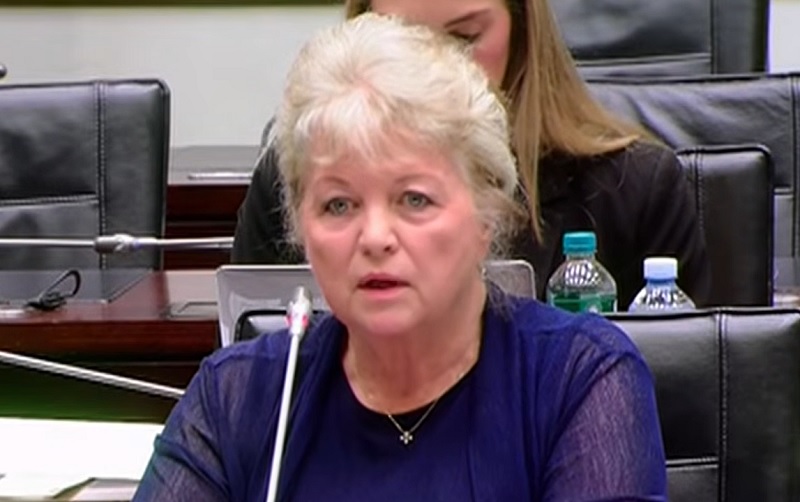
DA MP Kohler-Barnard before the Madlanga Commission
DA MP Dianne Kohler-Barnard has warned against labelling the entire judiciary as problematic. She was answering questions from the evidence leader of the Ad Hoc Committee looking into concerns around national security, Advocate Norman Arendse.
https://www.youtube.com/watch?v=a98xpbB3iyY
Kohler-Barnard, who is a member of Parliament, is testifying before the committee after KwaZulu-Natal Police Commissioner Lt-General Nhlanhla Mkhwanazi accused her of sharing classified information.
“We all know the wheels of justice grind so incredibly slowly, but finally, people are starting to be held to account. So, I think that’s a positive turn. But to label all the entire judiciary system to be a problem is in itself problematic. Pick up the specific issues to deal with them. But to just damn every judge, every magistrate, everybody involved, I think it’s excessive,” she says.
She says procurement processes at the South African Police Service (SAPS) have become a breeding ground for corruption over the years.
She says the flouting of the SAPS procurement processes paved the way for the crime intelligence slush fund to be a cash cow in the SAPS.
“Certainly, in SAPS, there are major issues along that line. Procurements is one of the major, biggest ones. Certainly, the slush fund is a huge problem. Looking global, it’s often handled differently to the way it’s handled here. Everyone has that sorts of slush fund in terms of where it’s needed for crime intelligence, etc. But certainly, the handling of it has extreme difficulty and anyone who has tried to control it or to get it under control, he’s sent out without a doubt. I have seen it happening over and over,” she says.
Kohler-Barnard says the poor vetting process in SAPS and in the criminal justice system is a massive problem.
“It has been a massive issue, as long as I have been here. When I am finally convinced the powers that be, there should for example be lifestyle audits (on) one of the top structures. Many of them just refuse and walk off. Many of them just do not do that and they just walk off. And there is zero control,” says Kohler-Barnard.
She says the same situation can be found at Crime Intelligence.
“But Crime Intelligence is the same. There is backlog. They do not have sufficient people to carry it out. It’s huge (where) you are dealing with people who are dealing with classified information (and) they don’t have security clearance. I often think what if the matter goes to court and they find out that the evidence was obtained by someone who does not have the rights,” she adds.