

-
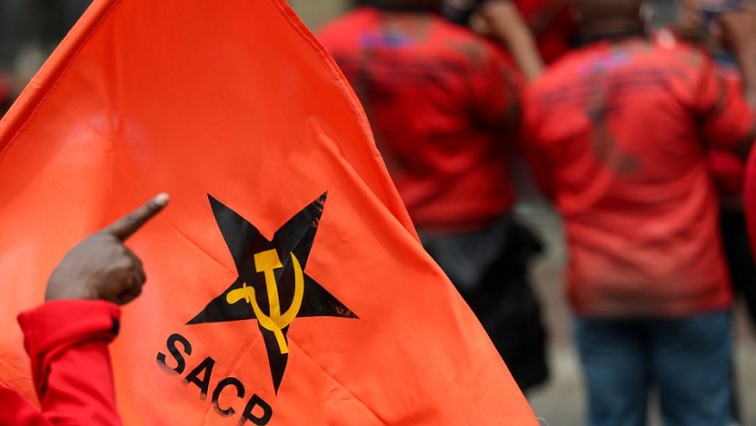
The SACP flag.
Tensions between the African National Congress (ANC) and its alliance partner, the South African Communist Party (SACP), are raising concerns about a growing contestation over the ownership and interpretation of key ideological frameworks within the tripartite alliance.
Political commentator Xolelwa Kashe-Katiya believes the SACP should ideally remain central in discussions on the National Democratic Revolution (NDR), arguing that the SACP has historically provided the ideological grounding that shaped the framework.
“The SACP should be at the centre of those discussions. The SACP has always been the leader in terms of those ideological underpinnings, that’s the influence, that’s what makes the ANC what they are, the presence of Cosatu, it’s about workers’ struggles. So, there was a particular identity that, you know, was supposed to be carried by the ANC, but with this fallout it is difficult to understand,” says Kashe-Katiya.
Concerns about a growing contestation over the ownership of the National Democratic Revolution between the ANC and the SACP? Political Analyst Xolelwa Kashe-Katiya weighs in. #ANCNGC2025 #SABCNEWS pic.twitter.com/6RBsM61dix
— Sipho King K Kekana (@KingKAzania) December 10, 2025
The NDR and its implementation since 1994 has featured prominently at the ANC’s National General Council (NGC) under way at the Birchwood Hotel in Boksburg.
Initially adopted by the SACP in 1962 to dismantle white minority rule and address political and economic exclusion, land redistribution, non-racialism and non-sexism, the framework was later embraced by the ANC in 1969 and became a cornerstone of post-apartheid alliance policy.
Over the years, however, the ANC has faced criticism for drifting from these principles. The current NGC has seen renewed emphasis on reclaiming and clarifying the alliance’s ideological programme.
Earlier today, ANC Secretary-General Fikile Mbalula took aim at the SACP over its decision to contest next year’s municipal elections independently of the ANC, describing the move as a both “erratic and dangerous”.
He also used the opportunity to reiterate that the ANC was the leader of the NDR programme.
“The decision of the SACP to contest the elections alone is erratic and very dangerous for the project called the National Democratic Revolution which is led by the African National Congress,” says Mbalula.
ANC Secretary-general Fikile Mbalula has described the SACP’s decision to go it alone in next year’s municipal elections as “erratic and dangerous” for the National Democratic Revolution. #ANCNGC2025 #SABCNEWS pic.twitter.com/Pn8URBmPQD
— Sipho King K Kekana (@KingKAzania) December 10, 2025
He conceded that the ANC had failed to persuade the SACP to reverse its decision.
“We have failed to persuade them otherwise. They are steadfast in that decision. In the mid-term report, what we are saying is that the National Executive Committee will process the practicality of that decision (as to) how we are going to handle the Communist Party that is contesting in the elections, not in the fold of the alliance. Because it has got implications on the issue, in particular of dual membership. Communist Party members now will have to choose between the ANC and the Communist Party. That will go even in the alliance,” he adds.
Mbalula also hinted at the need for an alliance summit to address the rift.
“We have agreed that we need to convene an alliance summit so that we all reflect on this particular matter. The Communist Party is invited and you heard their message of support. The first deputy general secretary of the Communist Party had difficulty in to explain that decision in the plenary. He spoke very well but when it came to why they must stand on their own there was difficulty in terms of explaining.”
Kashe-Katiya believes the ideological tensions stem from deeper historical misunderstandings within the alliance about the origins of certain ideologies and principles.
“I think it is also revealing of how maybe there isn’t an understanding of where some of these concepts come from and also because … you know what happens with history … when the victor emerges, they tend to rewrite history so that it suits their own narrative. And because the ANC had been positioned as the leader of the liberation struggle, a lot of things get shrouded by the major narrative to the point where it is easy to completely erase the origins of certain concepts. We see that happening even with public holidays, like Day of Reconciliation, or the Heritage Day, or June 16, where those struggles were struggles that emerged outside of elsewhere,” explains Kashe-Katiya.